
_edited.png)


Resident-Led. Community-Powered. Safety-Focused.
Our Focus
The East Cleveland Resident Safety Consortium is a resident-driven community safety initiative that brings together current East Cleveland residents, East Cleveland City School District alumni, and former residents who remain committed to protecting the people, neighborhoods, and community institutions that make East Cleveland home.
The Consortium strengthens community safety by connecting residents with training, practical resources, advocacy tools, appropriate technology, and community partnerships. We recognize that residents possess valuable firsthand knowledge. Their observations must be heard, documented, and included in decisions affecting neighborhood safety and well-being.
Safety Resources and Training
Provide residents with accessible safety information, emergency-preparedness resources, and practical training to help individuals, families, and neighborhoods recognize, report, and respond appropriately to safety concerns.
Advocacy and Community Leadership
Offer advocacy training that helps residents document concerns, communicate effectively with public agencies, participate in public meetings, track official responses, and press for safer neighborhood conditions.
Traffic and Pedestrian Safety
Identify and document residential areas where chronic traffic violations place residents at risk, including:
· Speeding on residential streets
· Drivers failing to stop at stop signs
· Reckless driving and illegal passing
· Blocked or unsafe intersections
· Faded crosswalks and missing traffic signs
· Poorly marked school zones
· Limited visibility caused by abandoned vehicles, overgrowth, or inadequate lighting
· Dangerous conditions near schools, playgrounds, parks, bus stops, and recreation areas
The Consortium will work with residents to document recurring patterns, including locations, dates, times, and the nature of the violations, and communicate those findings to the appropriate city, school, transportation, and public-safety authorities.
We will advocate for practical responses such as visible traffic enforcement, restored signs and crosswalks, improved street lighting, traffic studies, speed-warning devices, speed tables or other traffic-calming measures where appropriate, and clearly marked school and pedestrian-safety zones.
Children should be able to walk to school, play outdoors, cross their neighborhood streets, and travel to community activities without being placed at unnecessary risk by chronic speeding or drivers who refuse to obey stop signs.
Environmental Safety
Identify and document conditions affecting neighborhood health and safety, including illegal dumping, accumulated trash, unsafe properties, hazardous materials, overgrown lots, blocked sidewalks, poor lighting, and other threats to community well-being.
Protecting Children and School Communities
Monitor and document safety concerns around schools, playgrounds, recreation areas, bus stops, and the routes children and youth travel.
These concerns include reported open-air drug activity, dangerous traffic patterns, speeding, failure to stop at stop signs, unsafe street crossings, poor lighting, illegal dumping, deteriorating buildings, and other conditions that may threaten students, families, educators, and residents.
Special attention must be given to school zones and residential streets frequently used by children and youth, particularly during school arrival and dismissal, athletic activities, after-school programs, and neighborhood recreation.
School Safety Zone Campaign
Safety Doesn’t Stop at the Schoolyard
Children and youth should be able to walk to and from school in East Cleveland without passing unsecured, structurally dangerous, or neglected vacant properties.
The East Cleveland Resident Safety Consortium’s School Safety Zone Campaign calls for heightened attention to vacant houses and buildings near schools—whether those properties are privately owned or held by the City of East Cleveland Land Reutilization Program or the Cuyahoga County Land Bank.
Vacant Doesn’t Mean Exempt From Safety
Private owners and public entities responsible for vacant properties near schools should ensure that these properties are:
-
Secure — Exterior doors and windows are properly secured with intact locks or other approved security measures.
-
Protected against unauthorized entry — Buildings are maintained in a condition that discourages trespassing and unauthorized access.
-
Safe at all points of access — Porches, steps, doors, walkways, and other entrances are maintained in safe condition.
-
Structurally sound — Buildings are not allowed to deteriorate to the point that they threaten children, families, pedestrians, neighbors, or first responders.
-
Code-compliant — Properties meet all applicable building, housing, health, and fire-safety requirements.
-
Free of hazards and debris — Trash, overgrown vegetation, discarded materials, and accumulated debris are removed from the property and surrounding areas.


Supporting the East Cleveland Fire Department
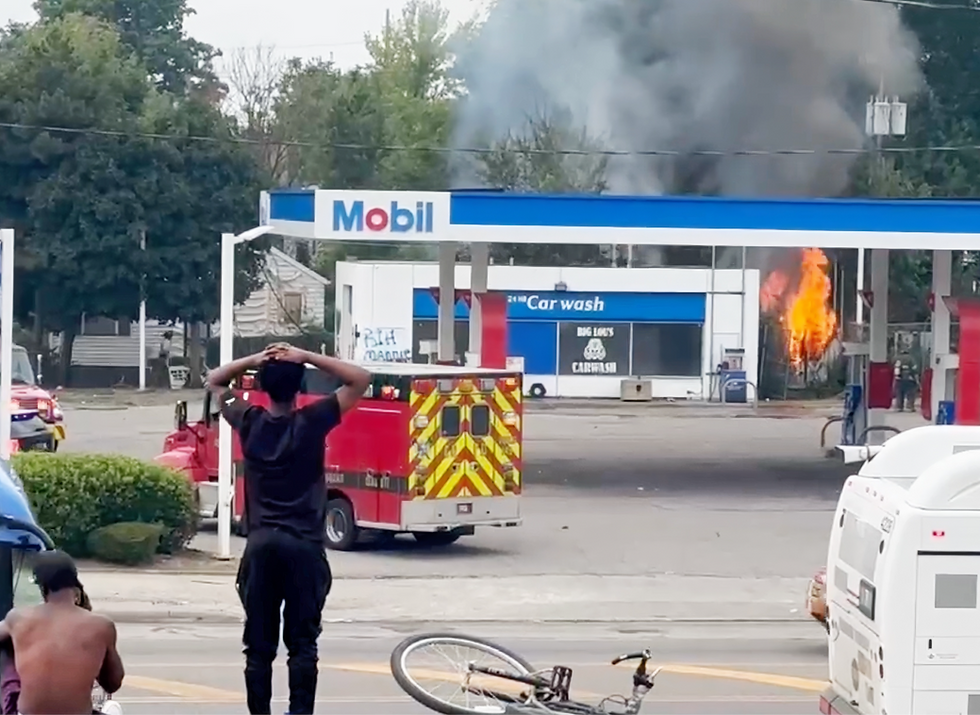
Mobilize donations, partnerships, and community support for the East Cleveland Fire Department to help strengthen the resources available to firefighters and the residents they serve.
Abandoned and illegally occupied properties place firefighters, neighboring families, and entire streets at risk. Early identification and reporting may help prevent a dangerous condition from becoming a tragic fire or community emergency.


From Observation to Action
Residents should not have to wait for a crisis, or another tragedy, before dangerous conditions receive attention.
We identify. We document. We educate. We report. We advocate. We connect. We follow up. We act.
Documentation without follow-up is not enough. The Consortium will work to track reported concerns, identify the responsible public or private authority, request timely action, and communicate results to residents whenever possible.
By combining resident knowledge, alumni connections, technology, safety training, advocacy, and community partnerships, the East Cleveland Resident Safety Consortium seeks to create stronger and more accountable lines of communication between residents and the institutions responsible for public safety.